Where to Eat Navratri Vrat Food in Mumbai: A Food Lover's Guide
Mumbai has a funny relationship with fasting. On paper, Navratri is about restraint — no grains, no onion, no garlic, no regular salt. In practice, it’s the season when the city’s kitchens go into glorious overdrive, churning out khatta meetha kaddu, crackling sabudana vadas, and kuttu puris puffed to golden perfection. Vrat food in this city is anything but austere, and October 2026 is shaping up to be the most deliciously decked-out Navratri yet.
This season has always held a special place in my heart. As Punjabis, we revere the Mata Rani and observe Navratra twice a year — and Sharad Navratri is extra special, because of the food we cook at home and the food choices that are entirely unique to this time. The satvik vrat table is my all-time favourite cuisine to talk about, and life has given me plenty of occasions to do exactly that. In my role as a news producer fixing lifestyle and event-based stories on Mumbai city and its newsmakers, I’ve played host to lovely international crew members from around the world — CNN to Al Jazeera, Reuters to AP’s SNTV and beyond. I remember one shoot in particular: a visiting CNN International crew, in town to cover the who’s who of the Bollywood film industry, put in a clear request — they wanted the special Indian cuisines Mumbai had to offer. What bridged every time zone and language barrier after that wasn’t just the food itself, but the conversation around it. The endless, genuine queries across a shared thali — what makes this recipe so unique? why this spice? how does sendha namak change everything? why do we fast from grains and not from flavour? The slow delight of watching new taste buds discover a cuisine my family has cooked and revered for generations. Over the years, these crews — and my own family — kept returning to the same handful of places. Here's where to go.
1. Govindas (ISKCON Temple, Juhu)
Few dining rooms in Mumbai carry the spiritual weight of Govindas, the beloved restaurant inside the ISKCON temple at Juhu. Cooking in the temple’s satvik tradition — pure vegetarian, no onion, no garlic, prepared with devotion and the discipline of a prasadam kitchen — Govindas serves food that feels as nourishing for the soul as it is for the body. During Navratri, this sensibility falls perfectly in step with the fasting season: the kitchen’s natural instinct for sattvic cooking makes it an effortless fit for vrat-friendly dining, from its generous thalis to its wholesome everyday staples. And there’s something quietly special about breaking your fast mere steps from the temple — families, devotees and the simply hungry have been doing exactly that here for decades. Perfect for those who want tradition and ceremony in the same meal.
2. B Bhagat Tarachand (Bhuleshwar / Mumbadevi)
Some places don’t do seasonal menus — they simply are the season. This historic, iconic restaurant near Mumbadevi temple has been feeding old-Bombay for generations, and come Navratri it serves a special Navratri Upwas Menu of traditional fasting dishes made with sendha namak and pure ingredients. This is fasting food the way your grandmother would recognise it — no shortcuts, no reinterpretation, just the deep authority of a kitchen that has cooked through nearly a century of Navratris. Come hungry, come devout, and come early — the faithful know exactly where to eat after darshan.
3. Soam (Babulnath)
I say this with the confidence of someone who has watched it happen a dozen times: Soam converts people. I’ve brought international crews to this little Babulnath institution countless times, and without exception, they’ve fallen in love. Renowned for its regional Gujarati comfort food, Soam curates seasonal faraali (fasting) menus featuring rajgira puris, dahi aloo, and traditional treats — food so honest and palatable that even a first-timer from the other side of the world immediately gets it. It’s become a standing rule on all my shoots: the crew eats at Soam. My family has been eating here for years too — which tells you everything you need to know.
4. Banana Leaf (All Outlets) — A South Indian Spin on the Fast
Banana Leaf proves that vrat food doesn’t have to be North Indian to be authentic. Its festive menu is packed with vrat-friendly favourites: Sabudana Idli with Sweet Curd, crisp Rajgira Sada Dosa, Rajgira Masala Dosa, Rajgira Masala Uttapam, Sabudana Vada, and Sabudana Khichdi — rounded out by Varai Upma, Varai Khichdi and Rajgira Puri Bhaji. A wholesome, comforting spread that shows how beautifully South Indian kitchens have made the fast their own — and with outlets across the city, it suits everything from a solo craving to a full family outing.
5. Shiv Sagar (Juhu, Vile Parle)
Planning a festive meal where not everyone at the table is fasting? Shiv Sagar is the answer — and its biggest strength during Navratri is how seriously it takes the vrat table. This is a kitchen that understands Jain and fasting requirements at a deep level, with Jain options available across the menu on request — no onion, no garlic, no root vegetables, everything prepared with the purity that satvik dining demands. Alongside the fasting-friendly staples, the extensive vegetarian spread means mixed tables never feel like a compromise: South Indian favourites like dosas, idlis, wadas and uttapams, Mumbai icons like pav bhaji, and plenty more for those not observing the fast. It’s the rare place where the person keeping the vrat and the person who isn’t both get a meal made with equal care. Big tables, mixed groups, picky eaters — everyone leaves happy here
6. Maharaja Bhog (Multiple Locations)
Famous citywide for its grand, unlimited vegetarian thalis, Maharaja Bhog goes gloriously maximalist every October with an elaborate Navratri Special Upvas Thali — think crisp farali patties, puffed rajgira puris, soulful potato preparations, and seasonal sweets to close. If your idea of a fast involves being genuinely, joyously full by the end of it, this is your temple — and with multiple locations, there’s always one within reach of the whole family.
The Finale:
7. Haldiram’s — Where the Whole Country Fasts Together
And then there’s the name that turned vrat dining into a national ritual. Haldiram’s is India’s largest and most iconic homegrown packaged snack and confectionery FMCG brand — what began in 1937 as a humble single namkeen shop in Bikaner, Rajasthan, founded by Ganga Bhishen Agarwal (fondly known as Haldiram Ji), is now a multinational food empire. And every Navratri, its outlets across the city and the country transform into ultimate dining hubs for fasting devotees — completely hygienic, pure-vegetarian, onion-garlic-free, and curated strictly with sendha namak.
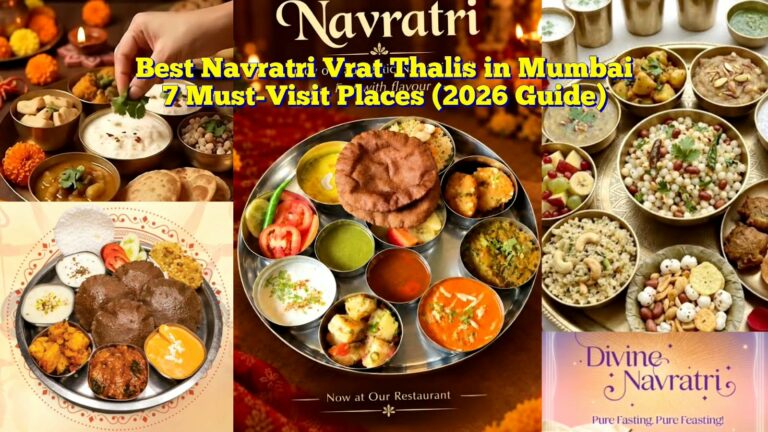
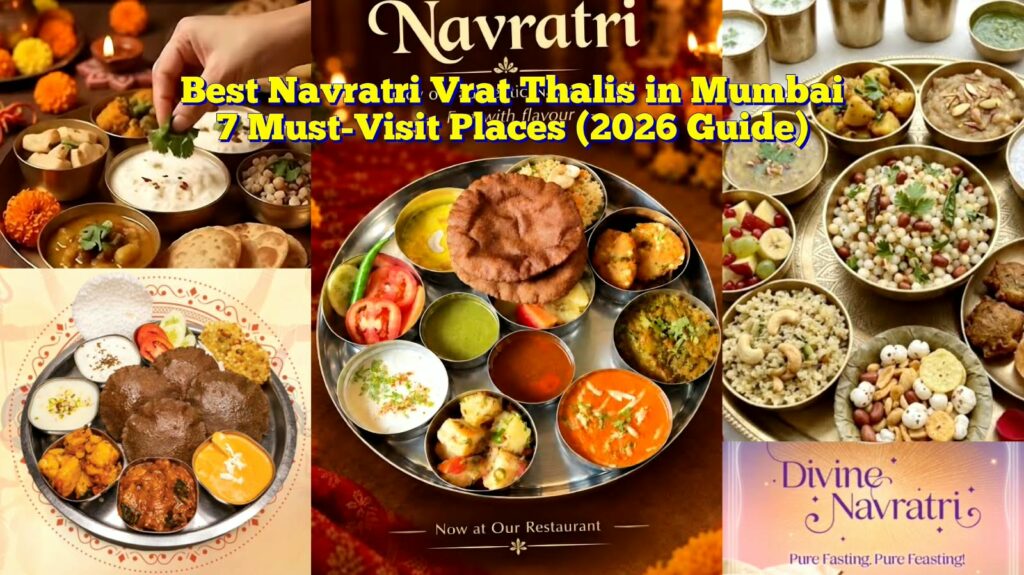
Walk into any Haldiram outlet — including the beloved Juhu destination — and order the Vrat Ki Thali, a comprehensive satvik feast: puffed Singhara and Kuttu ki Puris, comforting Aloo Sukhi Bhaaji, sweet-and-sour Khatta Meetha Kaddu, creamy Samak ke Chawal, crispy Sabudana Vadas, cool cucumber raita, and a sweet finish of Makhana Kheer or Vrat ka Halwa. Prefer a quick bite? The live counters serve standalone fasting favourites — Sabudana Khichdi, Farali Chaat, and fresh fruit platters — making it seamless to honour tradition while dining out.
Where: All Haldiram outlets across the city and the country
However you choose to mark the season — with a full fast or simply a full plate — Mumbai’s vrat table is proof that devotion and delight were never meant to be separate. From the temple kitchens of Juhu to the thali houses of the old city, every name on this list carries the same quiet promise: that food made with purity, patience and sendha namak can feed far more than hunger. It’s the lesson my family’s Navratra taught me, the one my crews discovered over shared thalis and endless questions, and the one this city serves up, year after year — that come Navratri, the fastest way to bring people together… is to ask them to slow down and eat.