


Mumbai doesn’t just host the Kala Ghoda Arts Festival — it lives it.
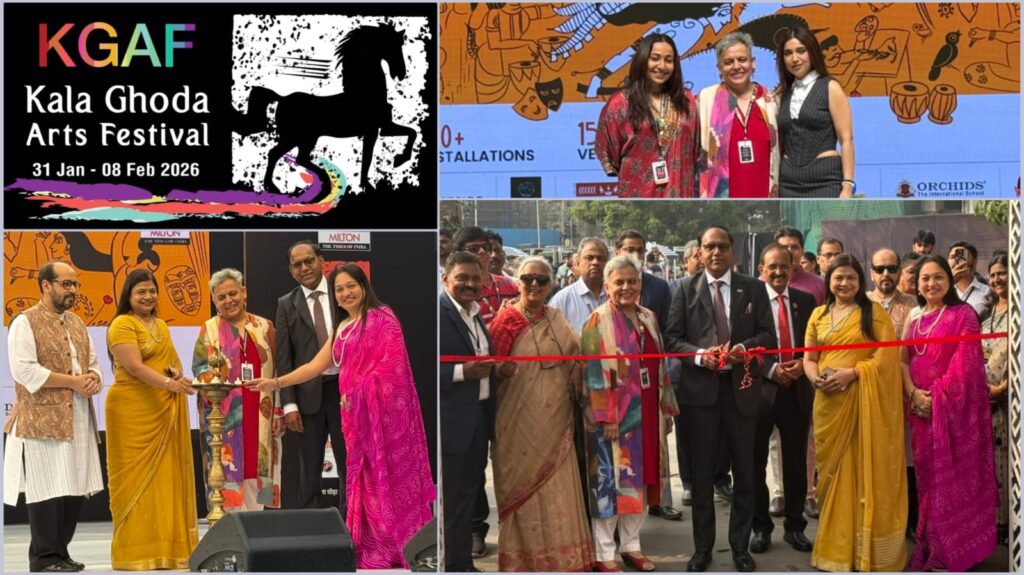
Every year, as January slips into February, the historic Kala Ghoda precinct transforms into a living, breathing canvas where art spills onto the streets, conversations replace silence, and creativity becomes a shared civic experience. The Kala Ghoda Arts Festival (KGAF) 2026, which opened on January 31, once again reaffirmed why it remains one of India’s most iconic and inclusive cultural festivals — rooted deeply in Mumbai’s identity and powered by the passion of its people.
Set against the heritage architecture of South Mumbai and hosted by the Kala Ghoda Association, the festival’s opening day unfolded as a vibrant preview of what promises to be nine immersive days of art, performance, literature, food, and ideas, running through February 8, 2026.
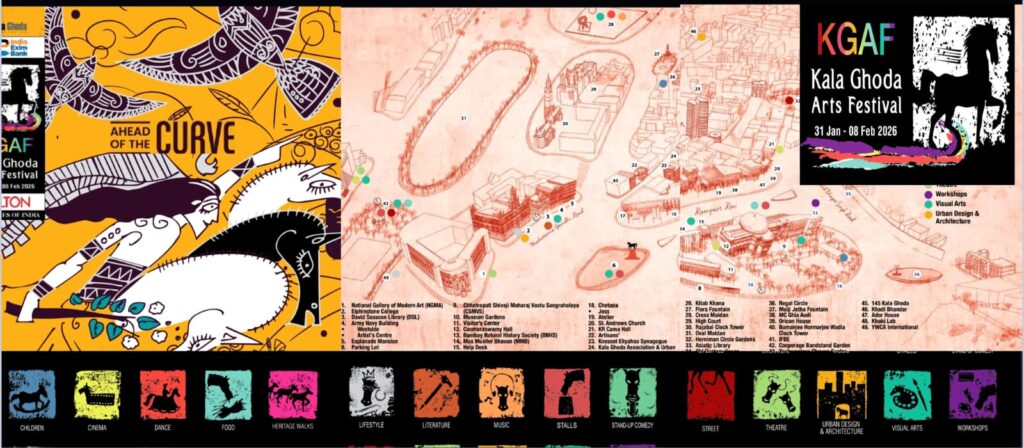
KGAF 2026 Opening Day: Key Moments & Launch Highlights
Visual Arts & Public Installations
The festival precinct came alive with striking art installations, interactive exhibits, and curated galleries that encouraged visitors to pause, observe, and participate. From contemporary expressions to socially reflective pieces, the opening showcased art that was both accessible and thought-provoking — a hallmark of KGAF’s curatorial vision.
Note: The installations were designed to blend seamlessly with the Kala Ghoda streetscape, inviting casual passersby and art enthusiasts alike into the creative dialogue.
Live Performances & Cultural Showcases
The launch featured a series of live performances spanning music, dance, and theatrical expressions. These performances set the tone for the festival’s multidisciplinary approach — celebrating both classical influences and modern interpretations.
Note: Performances were intentionally programmed in open public spaces, reinforcing KGAF’s philosophy of taking art beyond enclosed venues and into the heart of the city.
Literature & Conversations
The literature segment opened with readings, panel-style interactions, and informal conversations that drew in authors, thinkers, and curious listeners. The focus remained on storytelling — personal, political, poetic — reflecting Mumbai’s layered narratives.
Note: These sessions highlighted KGAF’s role not just as a festival of art, but as a forum for ideas and dialogue.
Food Court & Artisan Stalls
No KGAF opening is complete without its much-loved food and craft sections. The 2026 edition launched with a diverse mix of regional flavours, experimental menus, and handcrafted products that added warmth and sensory delight to the experience.
Note: The stalls emphasised sustainability, local entrepreneurship, and traditional craftsmanship, aligning with the festival’s community-first ethos.
Children’s & Interactive Zones
Families and younger visitors were welcomed with dedicated zones featuring workshops, hands-on activities, and playful learning experiences.
Note: These spaces reinforced KGAF’s inclusive nature, ensuring that creativity remains accessible across generations.
Why Kala Ghoda Arts Festival Still Matters
More than three decades on, the Kala Ghoda Arts Festival continues to stand as a cultural bridge — connecting heritage with contemporary expression, established artists with emerging voices, and the city with its creative conscience. Its ability to remain free, open, and people-driven is what keeps it deeply relevant in an ever-evolving Mumbai.
What Lies Ahead
With an exciting line-up of exhibitions, performances, talks, workshops, and culinary experiences scheduled over the coming days, KGAF 2026 promises something new every visit — encouraging Mumbaikars and visitors to return, rediscover, and re-engage
As the Kala Ghoda Arts Festival 2026 unfolds from January 31 to February 8, 2026, the city once again finds itself united by creativity, curiosity, and collective celebration. Whether you’re an art lover, a culture seeker, or simply someone who enjoys the pulse of Mumbai at its most vibrant, KGAF remains an unmissable chapter in the city’s cultural calendar. Check the details of the daily program here...
The People & the Legacy Behind Kala Ghoda Arts Festival
At the heart of the Kala Ghoda Arts Festival is a deeply committed community of cultural custodians led by Brinda Miller (Hon. Chairperson & Festival Director), alongside Dr Tarana Khubchandani (Hon. Secretary) and Sameer Tapia (Hon. Treasurer), with guidance from eminent voices such as Dr Saryu Doshi, Geeta Castelino, Saroj Satija, Sabyasachi Mukherjee, Ranjit Hoskote, Renu Basu and Radha Goenka.
Supported by an extensive festival, advisory, curatorial, accessibility, hospitality, and operations team, KGAF’s roots trace back to 1999, when the Kala Ghoda Association—formed in October 1998—launched Mumbai’s first-ever multidisciplinary street arts festival. What began as a conservation-led cultural initiative has since evolved into India’s largest free arts festival, drawing global audiences while channeling all proceeds back into restoring and preserving South Mumbai’s iconic Kala Ghoda heritage precinct.
Thanks for the very informative article. It is our best go-to site for all things Mumbai… especially in lifestyle and entertainment
Wow. It’s back….we will be coming this Thursday, travelling from surat for this ! hope it remains as fantastic as it has been!