How a Michelin-starred chef is transforming everyday Indian cooking with a vibrant, health-packed berry
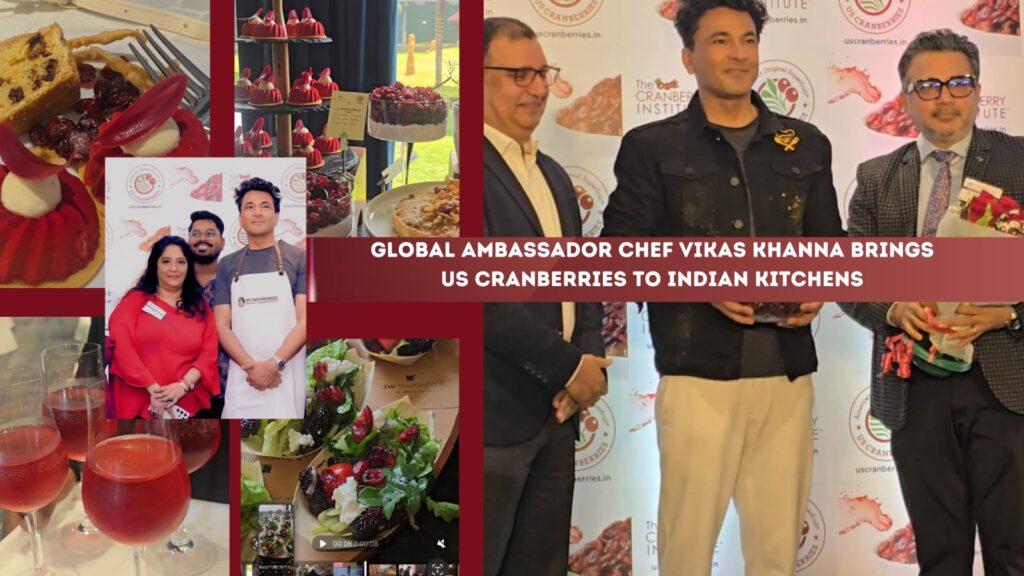
Some afternoons leave you with more than just good memories—they change how you look at your kitchen. When I received an invitation to an exclusive event hosted by The Cranberry Institute at a beautiful hospitality venue in Mumbai, featuring Chef Vikas Khanna as their newly appointed Global Brand Ambassador, I knew I was in for something special. What I didn’t expect was to discover a superfruit that would completely reshape my understanding of healthy, flavorful Indian cooking.
A vision of connection: East meets West in every bite
Chef Vikas Khanna has built his reputation not just on culinary excellence—though his Michelin star and the impossibly sought-after reservations at Bungalow in NYC certainly attest to that—but on a deeper philosophy. Having worked extensively in the West while remaining deeply rooted in Indian culinary traditions, he has dedicated his career to creating bridges between cultures through food. His partnership with US Cranberries represents this vision perfectly: taking an ingredient native to North America and demonstrating its natural affinity with Indian flavors.
This isn’t about fusion for fusion’s sake. It’s about recognizing when two culinary traditions can enhance each other, creating something that honors both while serving the modern Indian home cook who cares about health, taste, and visual appeal.
The demonstration: Innovation without fire
The culinary demonstration, elegantly adapted to the hospitality venue’s restrictions, showcased no-fire cooking—proving that culinary creativity doesn’t require elaborate equipment, just imagination. Chef Khanna transformed simple ingredients into a stunning Indian chaat that demonstrated the cranberry’s remarkable versatility.
Watching him work was witnessing a master at his craft. He showed how the tart, vibrant berry could cut through the richness of traditional chaat elements while adding its own nutritional powerhouse status. The pop of cranberry color against familiar Indian ingredients was visually striking—proof that healthy eating can also be beautiful eating.
What resonated deeply was his approach: this wasn’t about replacing beloved ingredients but about giving home cooks new tools to make their everyday cooking more nutritious and exciting. The cranberry wasn’t an intruder in Indian cuisine; it was a welcome guest that brought gifts of antioxidants, flavor complexity, and that gorgeous ruby hue.
The tasting experience: From bowl to banquet
Throughout the event, bowls of US Cranberries rested on each table, inviting us to experience the fruit in its pure form—dried, tangy, slightly sweet, completely addictive. Snacking on them between conversations, I understood why they’re considered a superfruit. But the real revelation came with the lunch spread.
The sumptuous buffet was a masterclass in cranberry integration. Every dish showcased that signature beautiful pop of cranberry color—from vibrant salads where the berries added jewel-like contrast, to savory preparations where they provided unexpected depth, to desserts where their tartness balanced sweetness perfectly. Each plate demonstrated Chef Khanna’s core message: cranberries don’t compete with Indian flavors; they complete them.
The visual impact was as striking as the taste. In a cuisine already celebrated for its color palette, the cranberry added a new dimension—crimson bursts against golden turmeric, deep reds alongside fresh greens, that distinctive hue that makes food look as nourishing as it is.
The health imperative: Science meets tradition
The panel discussion brought crucial context to why this partnership matters beyond the plate. Dr. Jignesh Gandhi, Professor of Surgery and Robotic & Gastrointestinal Surgeon at Gleneagles & Fortis Hospitals, Mumbai, shared research that transformed how I view this ingredient.
“H. pylori bacterial infection is a major health concern in India, affecting nearly 60% of our population and contributing to conditions ranging from chronic acidity to stomach cancer. This latest research highlights that consuming cranberry juice twice daily for eight weeks can reduce H. pylori infection rates by 20%. Such results indicate a promising, natural, and complementary strategy to manage this persistent infection alongside conventional medical treatments.”— Dr. Jignesh Gandhi
The implications are significant for Indian health:
“If this approach is adopted widely in India, it could significantly improve patient compliance, reduce antibiotic resistance, and positively impact our overall health economy.”
Here was modern science validating what Chef Khanna intuitively understood: this berry belongs in Indian kitchens not just for taste, but for wellbeing.
Bringing cranberries home: Accessibility and inspiration
Mr. Sumit Saran, India Representative for The Cranberry Institute, emphasized the practical side of this culinary revolution:
“We are very delighted and honoured to be associated with renowned culinary maestro, Chef Vikas Khanna. His extraordinary talent and passion for food have not only elevated Indian cuisine on the global stage but have also inspired countless food enthusiasts. His ability to connect health, heritage, and gastronomy makes him the ideal ambassador for the fruit.”— Mr. Sumit Saran, India Representative, The Cranberry Institute
The accessibility is key: US Cranberries are now easily available with dry fruit stores and leading e-commerce platforms. Whether you prefer them dried for snacking and cooking, as juice for health benefits, or as sauces and concentrates, they’re within reach of every Indian home cook.
The afternoon’s lasting impact
Between the insightful panel and the masterclass, the afternoon turned into a vibrant reunion as I bumped into familiar faces like Chef Rakhee Vaswani and Chef Yogesh Utekar, while sparking wonderful new friendships with our lovely host, Shreya Gautam, and fellow lifestyle aficionados. There’s a special kind of magic in clinking glasses of chilled cranberry juice before diving into a delectable, berry-infused lunch! As the event wrapped up with a final toast among my new “foodie fam,” I realized the true highlight wasn’t just the glamour; it was watching a celebrated icon like Chef Vikas Khanna use his global platform for genuine education, showing us all how to elevate our daily meals with a simple, soulful superfood.
My kitchen now looks different. The cranberry has earned its place beside my spices—not as a replacement, but as a powerful ally. In my morning routine, in my rice dishes, in my chutneys, in my desserts, that beautiful pop of cranberry color has become a regular presence.
This is what happens when a master chef partners with a superfruit: everyday cooking becomes an opportunity for better health and greater creativity. And that is an afternoon well spent indeed.
Have you tried incorporating US Cranberries into your Indian cooking? What dishes would you love to enhance with this vibrant superfruit? Share your thoughts in the comments!
For recipes, health information, and culinary inspiration featuring US Cranberries, visit: https://uscranberries.in/
#USCranberries #VikasKhanna #IndianCuisine #Superfruit #HealthyCooking #CranberryRecipes #MichelinChef #ChefVikasKhanna #HealthyIndianFood #SuperfoodIndia #CulinaryInnovation #CranberryBenefits #HomeCooking #NutritiousAndDelicious #CranberryChaat #HealthyEating #IndianKitchen #FoodColors #AntioxidantRich