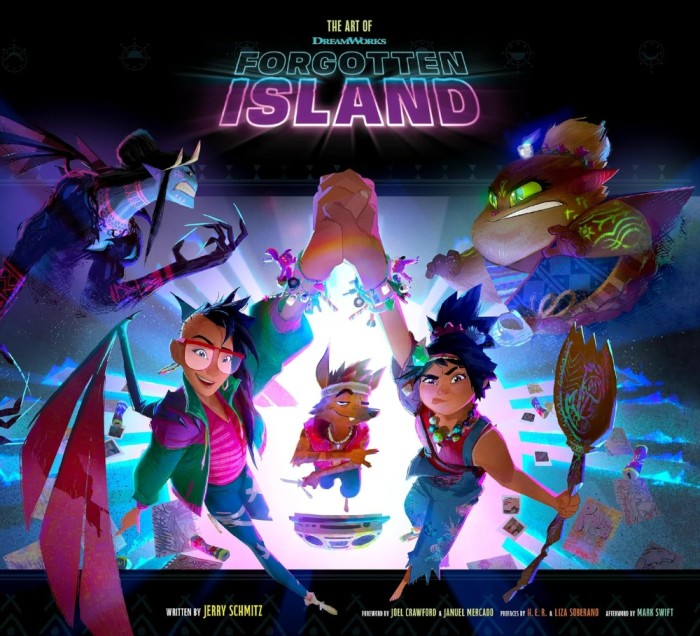
Some films entertain you. Some films make you laugh. And then there are those lovely films that leave you walking out with a little more warmth in your heart. DreamWorks Animation’s ‘Forgotten Island ‘belongs firmly in that last category.
There are songs you find yourself humming after a movie, characters whose names you remember simply because they made you smile, and tiny moments that stay with you long after the credits roll.
Forgotten Island has plenty of all three.
From its energetic musical opening to the wonderfully weird world of Nakali, this is a film that embraces friendship, folklore, humour, music and memory with such infectious enthusiasm that it becomes very easy to simply settle in and enjoy the ride.
And yes, there is a “Tayo na!” spirit running through it all — come on, let’s go! — which feels rather appropriate for a film that is essentially one big invitation to join Jo and Raissa on their extraordinary adventure.
Jo and Raissa: When Friendship Becomes the Heart of the Story
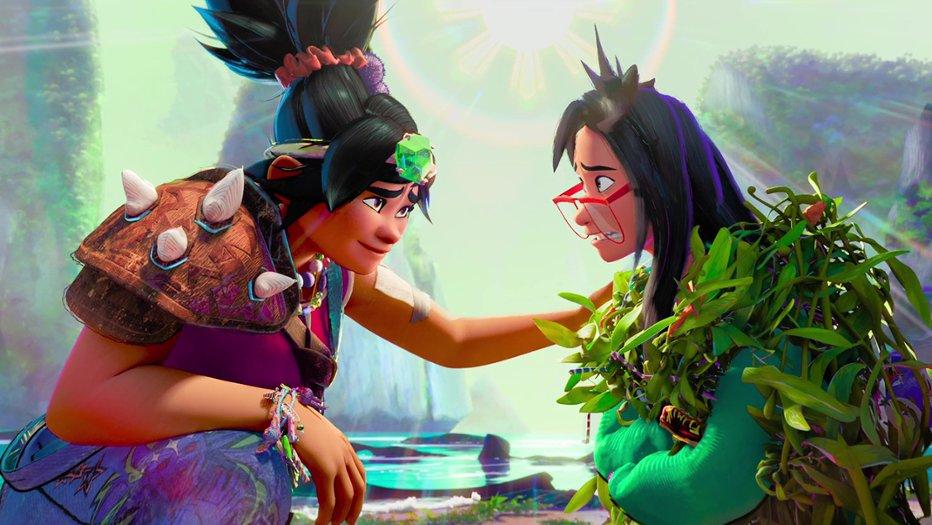
At its heart, Forgotten Island belongs to Jo and Raissa, two best friends whose lives are about to move in very different directions after high school.
Raissa is preparing to leave the Philippines for Caltech in America, while Jo faces the very real possibility of being left behind. Their friendship has grown from childhood into that wonderfully intense teenage bond where the other person isn’t simply your best friend — they are part of your history, your secrets, your weirdness and your memories.
That relationship is what gives the fantasy its emotional grounding. The girls share a love of the strange and macabre, happily embracing stories of Filipino folklore and recreating them for their classmates with a generous splash of fake blood. Their chemistry is playful, funny and wonderfully believable, making it easy to understand why the possibility of losing that friendship matters so much.
When their final night together takes them into Nakali, the mystical world they once heard about through stories, the adventure becomes far more than finding a way home. It becomes a journey through everything they mean to each other.
Welcome to Nakali — Where Filipino Folklore Gets Colourful
Nakali is where Forgotten Island lets its imagination run completely wild.
The film draws from Filipino folklore and mythology, bringing a host of creatures into a world that is colourful, bizarre, funny and occasionally deliciously creepy. It is also one of the film’s most distinctive qualities: rather than relying on the usual fantasy creatures audiences may already know, Forgotten Island opens the door to a mythology that deserves a much bigger place in mainstream animation. Reuters describes the film as a major Hollywood animation centred on Filipino folklore and culture.
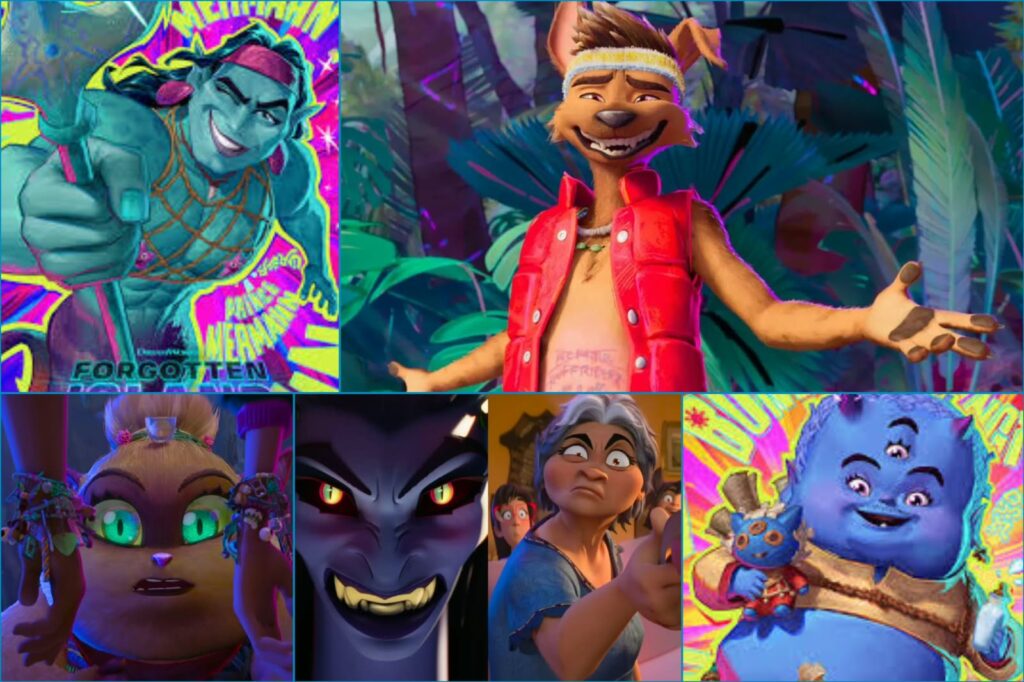
Leading the girls through this madcap world is Raww, the exuberant weredog voiced by Dave Franco, whose own adventures with Jo and Raissa become part of the mystery surrounding their time in Nakali.
Then come the wonderfully eccentric inhabitants — Bungi, the baby-like creature voiced by Manny Jacinto; Batiba, the memory-collecting creature voiced by Jenny Slate; Prince Mermahn, and the diminutive but gloriously grumpy King Truffle Wuffle, voiced by Ronny Chieng.
And then there is Manang, the terrifying Manananggal voiced by Lea Salonga — one of the film’s most striking mythological figures and certainly not someone you would want turning up unexpectedly on a dark night!
Each character adds another flavour to Nakali, and the sheer variety keeps the adventure visually and tonally playful.
The Little Things You Will Remember
One of the pleasures of Forgotten Island is that it doesn’t always try to make every joke or character moment profound. Sometimes it simply wants you to laugh.
Kakaiba Market. Tayo na. Bungi. Batiba. King Truffle Wuffle. The little Duwende King, the stolen sand dollar, the wonderfully ridiculous fire-puking moments and that general sense that absolutely anything can happen next.
There are also musical moments that add to the film’s throwback, feel-good energy, from “Never Tear Us Apart” to the cheeky “I Love Big Butts” gag and the unmistakable party energy of “This Is How We Do It.”
The soundtrack and pop-culture touches give the film a personality that feels deliberately nostalgic while still being very accessible to today’s kids and teens.
When the Adventure Is Over, What Remains?
This is where Forgotten Island quietly becomes more than a colourful animated adventure. Without getting into spoilers, the aftermath of Jo and Raissa’s experience in Nakali brings the story back to its central question: what are we without the memories we share with the people we love?
The fantasy may be filled with mythical creatures, wild adventures and outrageous comedy, but the emotional stakes remain remarkably simple.
Jo and Raissa are growing up. Their lives are changing. And sometimes growing up means accepting that the future may not look exactly like the childhood you imagined.
The film handles that idea with enough humour and warmth that it never becomes overly heavy. Instead, it keeps returning to the importance of friendship, shared memories and the people who help make us who we are. That is what makes its message so universal.
A DreamWorks Film With a Filipino Heart
There is also something genuinely exciting about seeing Filipino folklore placed so prominently within a major DreamWorks Animation feature.
The film is written and directed by Joel Crawford and Januel Mercado, the same filmmaking team behind Puss in Boots: The Last Wish, with Mark Swift producing. DreamWorks describes Forgotten Island as an original story about two lifelong friends whose separate paths threaten to pull them apart.
The voice cast brings together an eclectic and impressive mix of talent: H.E.R. as Jo, Liza Soberano as Raissa, Dave Franco as Raww, Jenny Slate as Batiba, Manny Jacinto as Bungi, Dolly de Leon as Lola Fatima, Jo Koy as Datu, Ronny Chieng as King Truffle Wuffle and Lea Salonga as Manang.
H.E.R. and Liza Soberano are particularly important to the emotional balance of the film. Their voices give Jo and Raissa the warmth and individuality needed to make their friendship believable, while the supporting cast brings the larger-than-life inhabitants of Nakali to wonderfully eccentric life.
And behind all that colour and chaos is an animation style that happily refuses to stay in one lane. The film moves through vibrant computer animation, stylised sequences and exaggerated visual comedy, creating a world that feels appropriately dreamlike and unpredictable. Critics have also noted the film’s restless visual energy and its blend of Filipino folklore with a coming-of-age friendship story.
A Feel-Good Film for Kids, Teens and the Family
What I particularly enjoyed about Forgotten Island is that it doesn’t insist on being only one thing.
For children, there are adorable creatures, colourful worlds, silly humour and adventure.
For teenagers, there is Jo and Raissa — that very real friendship where your best friend can feel like your entire world, just as life is preparing to change everything.
And for adults watching along, there is the nostalgia of growing up, watching relationships evolve and understanding that some of our most precious memories are the ones we never realised we were making at the time.
The film also gives families something lovely to talk about afterwards — friendship, memories, growing up, culture and the importance of holding on to the people who matter, even when life takes everyone in different directions.
The LifestylesOfMumbai Take
There is something wonderfully uncomplicated about walking out of a movie feeling happy.
Not every film needs to leave you analysing its symbolism for hours. Sometimes you simply need a vibrant story, characters you enjoy spending time with, music that makes you smile and a message that lands somewhere warm. Forgotten Island gives you exactly that.
It celebrates the weird ones, the adventurous ones, the friendships that survive change and the memories that make growing up a little less frightening.
It also opens a colourful window into Filipino folklore and culture, making Nakali feel like a place audiences everywhere can visit — even if only for a couple of hours.
And ultimately, its biggest message is beautifully simple:
Make memories. Hold on to your people. Be there for your friends.
No stars needed here. Just lots of love. ❤️
Because sometimes a feel-good movie does exactly what it promises — it makes you smile, leaves you humming a song and sends you home wanting to make another memory with the people you love.