
Every parent today knows this scene too well. A child, head bent. Eyes fixed on a screen. One more game. One more level. One more video. Hours pass. Movement doesn’t.
In a city like Mumbai, where schedules are packed and digital access is constant, childhood is increasingly unfolding indoors. Between online classes, gaming consoles, endless scrolling, and virtual worlds, there are fewer reasons for children to step outside. And somewhere between digital rewards and online battles, childhood quietly becomes sedentary.
Yet, over the years, my work as a Line Producer for the international sports news agency took me far beyond the city — into small towns and rural heartlands across India. What I witnessed there stayed with me.
Children playing. Running. Practising. Competing.
On dusty grounds, open fields, village lanes — often with limited facilities but limitless enthusiasm. What struck me even more was the mindset of their families. Despite modest means, many parents made sure their children pursued a sport or outdoor interest alongside their education. They understood something powerful — that sport is not just recreation. It builds discipline. Focus. Resilience. Confidence.
When a child grows up balancing academics with a physical passion, they don’t just develop a skill. They develop character. The kind that helps them handle pressure, setbacks, and life’s uncertainties with strength and clarity.
And every now and then, one of those children rises from those fields and reminds the country what early passion and belief can achieve.
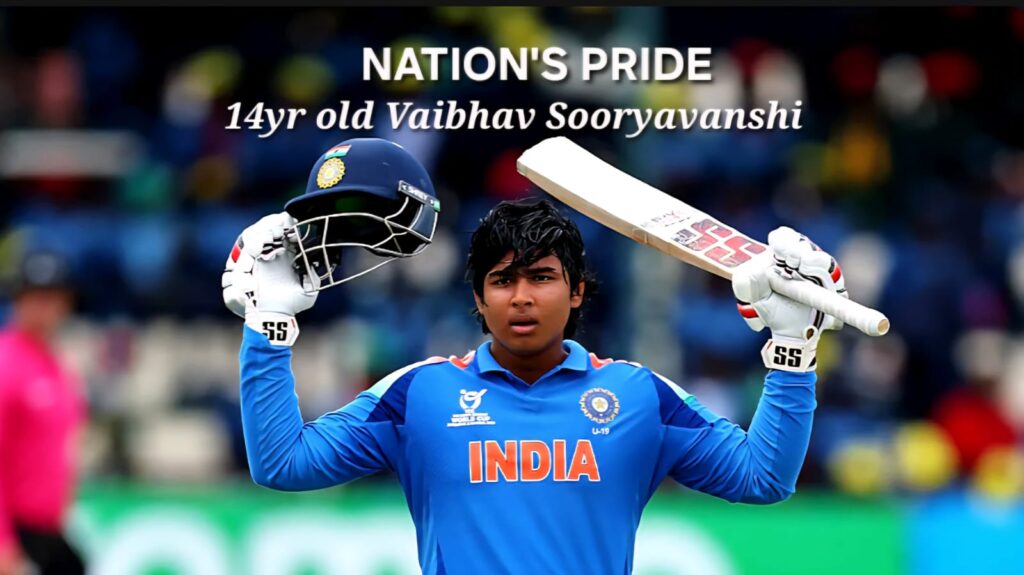
One such story belongs to Vaibhav Suryavanshi.
A Final That Made India Sit Up
In the Under-19 World Cup final against England, a 14-year-old walked in with the confidence of a seasoned professional. What followed was nothing short of breathtaking. Vaibhav smashed 175 runs off just 80 balls — the highest individual score ever recorded in an ICC tournament final, across youth or senior cricket. Fifteen sixes. Fifteen fours. A strike rate of 218.75. 150 runs in boundaries alone.
India piled up 411, eventually winning by 100 runs. Vaibhav walked away with both Player of the Match and Player of the Tournament. But the real story wasn’t written in Harare that day. It began years earlier, in a small town in Bihar.
The Boy Behind the Brilliance
Born on March 27, 2011, in Tajpur, Samastipur, Vaibhav didn’t grow up with world-class facilities or big-city advantages. What he did have was something far more powerful: A family that believed. And a dream he took seriously — very seriously. By the age of eight, his routine was already tougher than most adults could manage. Every day, he travelled nearly 100 kilometres from Samastipur to Patna for training at the GenNex Cricket Academy. His sessions ran from morning to evening, often facing 400–450 balls a day.
His mother would wake up at 2 a.m. to prepare for his long days. His father reorganised their life around his training, despite limited means. There were no shortcuts. No viral fame. Just early mornings, long journeys, and relentless practice. Coaches say what stood out wasn’t just his skill — it was his fearlessness. He never looked intimidated, even when playing against older, stronger opponents. That mindset — more than talent — is what champions are made of.
Why This Story Matters to Every Parent Today
Because Vaibhav’s journey holds a mirror to modern childhood. Today’s kids are growing up in a world of instant gratification — quick wins, fast entertainment, endless digital distraction.
But sports offer something the virtual world never can: The patience to improve. The humility to lose. The courage to try again. The discipline to show up every day.
When a child commits to an outdoor sport or physical activity, something powerful begins to take shape: They learn time management without being taught. They build confidence through effort, not validation. They develop emotional resilience when things don’t go their way. They understand the value of hard work over shortcuts. In a world that rewards speed, sports quietly teach endurance.
Early Passion Shapes Personality
What stands out in Vaibhav’s story isn’t just the records. It’s the clarity of purpose at such a young age. He wasn’t just “playing cricket.” He was training like someone with a vision. That’s what early passion does. It gives children direction. It keeps them grounded. It builds identity around effort rather than external approval.
We’ve seen similar journeys in players like Jemimah Rodrigues, the Mumbai girl who balanced academics and sport to become an international cricketer.
Different cities. Different backgrounds. Same formula: early interest, consistent support, and space to grow.
The Bigger Lesson for Urban Families
Not every child needs to become a professional athlete. But every child needs something that pulls them outdoors, challenges them physically, and teaches them commitment.
It could be cricket at the local maidan. Football, swimming, athletics, tennis, skating — anything that gets them moving, competing, learning. Because the goal isn’t medals.
The goal is a child who grows up: Active and healthy. Mentally strong. Comfortable with failure. Focused on long-term goals And perhaps most importantly — someone who knows the joy of earning success.
A Lifestyle Choice, Not Just an Activity
In cities like Mumbai, where schedules are packed and screens are always within reach, sports are no longer an extra-curricular luxury. They are essential. Because childhood today needs balance more than ever. And sometimes, all it takes is one strong interest — one field, one court, one ground — to change the direction of a young life.
The Real Takeaway
When Vaibhav Suryavanshi stood at the crease and rewrote records at 14, he didn’t just win a match. He reminded us of something simple, yet powerful:
When children find their passion early and are given the space to pursue it, they don’t just become better players. They become stronger people.
Maybe the question for parents today isn’t how to reduce screen time.
Maybe it’s this:
What dream are we helping our children wake up early for?



1 thought on “Beyond Screens: How Sports and Outdoor Passion Are Shaping India’s Young Champions”