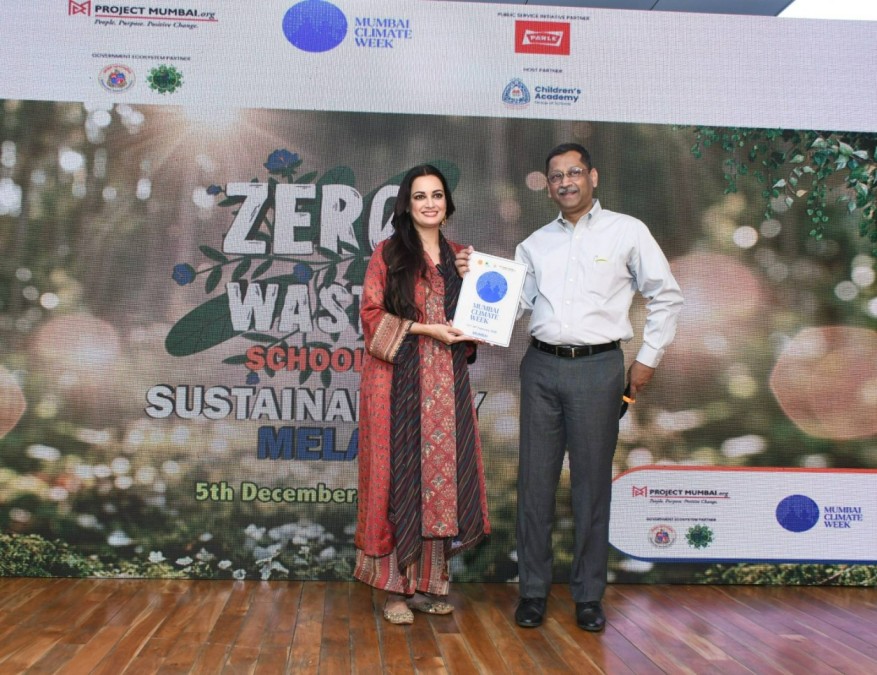
Mumbai saw a refreshing surge of youthful climate energy at the Zero Waste Schools Sustainability Mela 2025, hosted by Project Mumbai under the theme “Hope in Action: Youth for a Climate-Resilient Mumbai.” What made the day stand out wasn’t just the scale of participation—over 30 schools and hundreds of students—but the way sustainability unfolded as a lived, hands-on experience rather than a classroom concept.
Designed as a precursor to Mumbai Climate Week 2026, the Mela bridged grassroots school initiatives with the city’s larger climate ambitions. The day opened with the screening of the Zero Waste Schools film and a symbolic diya lighting, setting a reflective yet forward-looking tone. Leaders from governance, education and environmental science spoke about why climate responsibility must begin early—and stay consistent.
Among the voices were Shri Sudhakar Bobade, Mission Director of Majhi Vasundhara Abhiyan, who spoke about climate-responsive governance shaped through decades of public service, and Shishir Joshi, Founder & CEO of Project Mumbai and Mumbai Climate Week, who emphasised the power of citizen-led change. Educator Ronit Bhat highlighted the importance of experiential learning, while marine biologist Konark Borkar spoke about nurturing scientific curiosity among students. The presence of the programme’s youngest student champions added quiet credibility to the idea that leadership today has no age barrier.
The real pulse of the Mela, however, was in its interactive spaces. Sustainability unfolded through plastic-free décor, green reading sessions, sustainable gift wrapping workshops, and a buzzing exhibition zone filled with game-based learning stalls, NGO booths, and circular economy showcases. Live demonstrations on composting, recycling, upcycling, and low-waste living turned everyday environmental habits into practical lifestyle choices for students.
A strong afternoon highlight came through the keynote by Yusuf Kabir, WASH CCES Specialist at UNICEF India, whose work in climate adaptation and public health struck a chord with the young audience. This flowed into an engaging student-led panel moderated by Rahul Bagwe, where school students spoke openly about running eco-initiatives, tackling plastic use on campus, and the small victories that slowly shift behaviour.
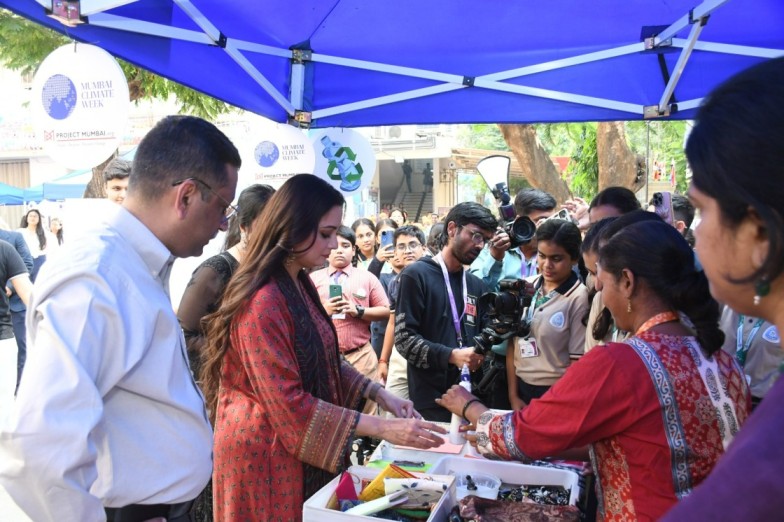
The emotional centre of the day arrived with Dia Mirza, Chief Guest and UN Environment Goodwill Ambassador. In a warm, townhall-style interaction, she spoke directly with students about climate responsibility, mindful living and accountability. Her message landed with clarity—young people are not waiting to inherit the future; they are already shaping it. Her grounded presence became a powerful reminder of how purpose-driven celebrity engagement can amplify youth-led movements.
The Mela also celebrated real-world progress on the ground. An awards ceremony recognised 9 Level 2 schools, 20 Level 1 schools, and 20 facilitators for their consistent work in building zero-waste ecosystems through composting, waste segregation, recycling and student-driven sustainability programmes.
What stayed long after the stalls began to close was the feeling that this wasn’t just a one-day festival—it was a snapshot of how climate leadership is quietly evolving across Mumbai’s schools. By connecting everyday student action with city-wide resilience thinking, the Mela reinforced a powerful truth: when sustainability becomes a habit early in life, its impact travels far beyond school gates.
As echoed across the venue, this wasn’t just about awareness—it was about momentum. When students lead, the city follows.
Those wishing to engage further with the Zero Waste Schools initiative may note that Project Mumbai continues to invite citizens to be part of the larger climate-action movement through volunteering, partnerships and community support.Write to them at info@projectmumbai.org or call on. 96533 30712.